
Who Can Save Italian Football? Inside a Crisis That No Longer Makes Sense
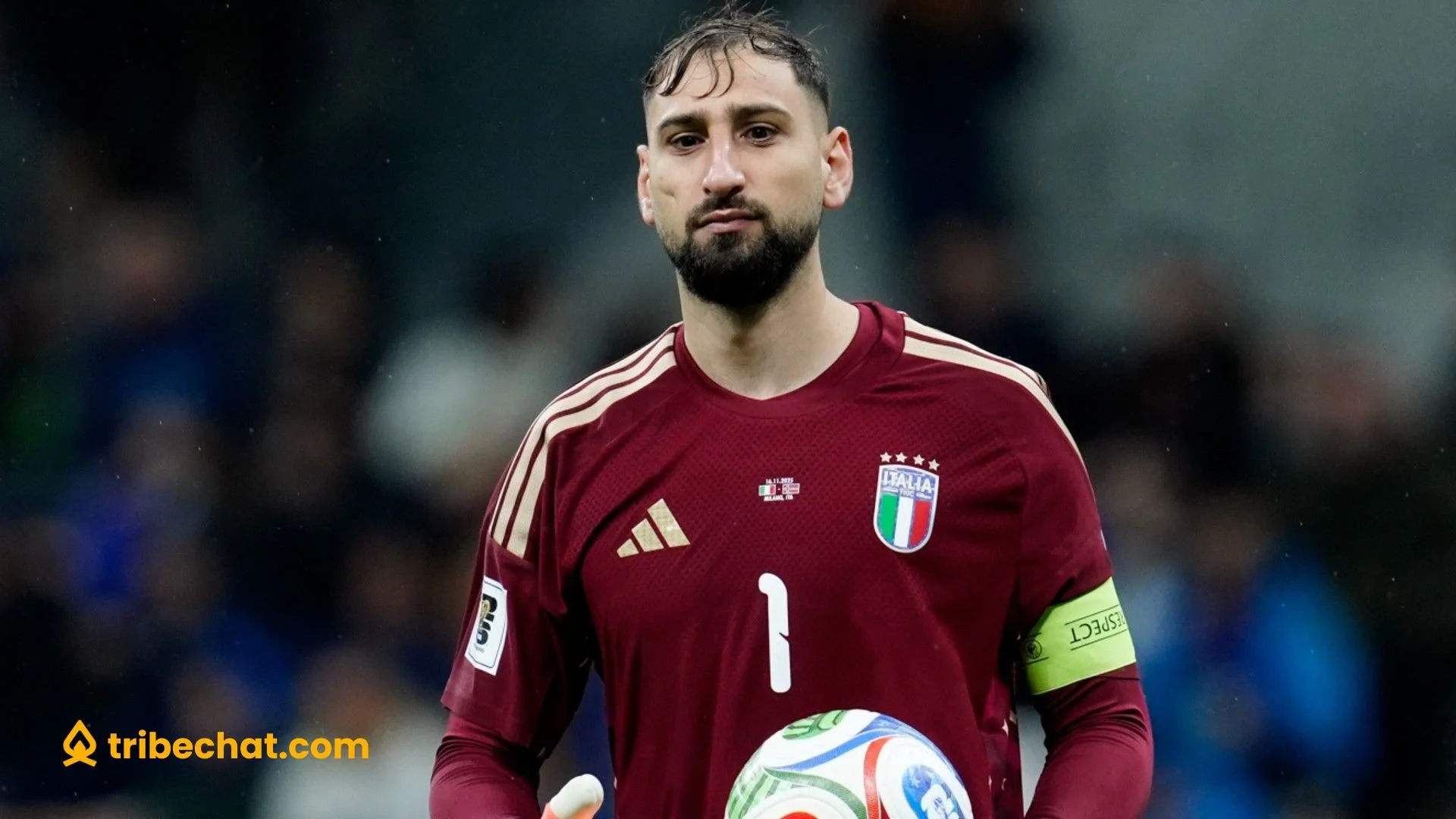
Donnaruma, one of the best goalkeepers in the world, will fail to appear on the world stage once again.
Italian football has always been built on certainty. Certainty in identity. Certainty in structure. Certainty in the idea that, when it mattered most, Italy would find a way. That certainty is long gone.
The Italy national football team has now failed to qualify for the World Cup in both 2018 and 2022. For a nation that has lifted the trophy four times, that statistic is not just surprising — it is almost incomprehensible.
And yet, the deeper you look, the harder it becomes to explain why.
Because this is not a country without players. It is not a system devoid of technical ability. Italian football still produces defenders with intelligence, midfielders with tactical awareness, and attackers capable of playing at the highest level in Europe.
So why can’t they qualify?
A Generation Problem — Or a System Problem?
It is tempting to reduce Italy’s struggles to a weak generation. That argument is convenient, but it does not hold up under scrutiny. Italian players are still present across top European clubs. The pipeline has not dried up. What has changed is how those players function when brought together under the national team.
At club level, they operate in modern systems — high pressing, positional rotations, fluid attacking structures. At international level, Italy often looks slower, more rigid, and uncertain in possession. This disconnect suggests something deeper than talent.
It suggests a system that has not fully adapted.
The Tactical Identity Crisis
For decades, Italy’s footballing identity was unmistakable. Defensive organization was not a weakness — it was an art form. Matches were controlled through structure, spacing, and patience. But modern international football has shifted.
Teams like France and England combine athleticism with tactical flexibility. Even traditionally pragmatic sides have evolved to incorporate pressing triggers, vertical transitions, and dynamic attacking patterns.
Italy, by contrast, appears caught between two philosophies.
Under Roberto Mancini, the victory at Euro 2020 suggested a successful evolution — a team capable of controlling possession while maintaining defensive discipline. But that success masked underlying inconsistencies.
In qualification campaigns, where adaptability and efficiency are critical, Italy has struggled to impose a clear identity. They are no longer the most disciplined defensive unit, nor are they among the most dangerous attacking sides. They are, increasingly, a team without a defining edge.
Structural Issues Inside the Italian Football Federation
Blaming tactics alone misses the broader picture. The challenges facing Italian football are also institutional.
The Italian Football Federation has long been criticized for failing to modernize at the pace required by the global game. While other federations have invested heavily in youth development, sports science, and coaching education, Italy’s progress has been uneven.
There are recurring concerns:
Youth pathways that do not consistently prioritize elite development
Limited opportunities for young domestic players in top-flight football
A league structure that often prioritizes short-term results over long-term growth
A lack of cohesive national philosophy linking youth teams to the senior squad
These are not surface-level issues. They shape the type of players produced and the style of football they are prepared to play. And without structural alignment, even talented generations can underperform.
The Coaching Question — Necessary but Not Sufficient
When a national team struggles, the instinct is to look to the manager. Italy is no different.
But focusing solely on the coach risks oversimplifying the problem. Even a tactically progressive manager will struggle without systemic support — without a pipeline of players suited to a defined style, and without institutional clarity.
That said, the next managerial appointment will matter.
Italy must decide what it wants to be.
A modern, high-intensity side built around pressing and athleticism
A refined version of its traditional identity, emphasizing defensive mastery and control
Or a hybrid model that genuinely integrates both approaches
What it cannot afford is ambiguity…because ambiguity is exactly what has defined recent qualification failures.
A Psychological Shift — From Authority to Uncertainty
There is also an intangible element to Italy’s decline.
Historically, opponents feared Italy. Matches against them carried a psychological weight — an expectation that Italy would manage the game, dictate tempo, and exploit mistakes.
That aura has faded.
In recent qualifiers, Italy has looked tense in key moments, particularly in matches where they were expected to dominate. Missed chances, hesitant decision-making, and a lack of composure have become recurring themes.
This is not just tactical. It is psychological. Rebuilding that confidence requires more than a change in formation. It requires a re-establishment of identity and belief.
What Would Real Reform Look Like?
If Italian football is to recover, incremental changes will not be enough.
A credible path forward would likely include:
A clear national playing philosophy implemented across all age levels
Greater integration between youth development and the senior team
Structural incentives for clubs to develop and trust young Italian players
Investment in modern coaching methodologies and analytics
A long-term vision that extends beyond a single qualification cycle
This is not a quick rebuild. It is a cultural reset.
The Stakes Ahead
Italy has not qualified for a World Cup since 2014. For most nations, that would be disappointing. For Italy, it is a crisis. Failure to qualify again would not simply extend a poor run — it would redefine expectations. It would signal that Italy is no longer a guaranteed presence at the highest level of international football.
And that is a reality Italian football has never had to accept.
The Debate That Matters
So the question is no longer just what went wrong.
It is what kind of football nation Italy wants to become next.
Should they fully embrace modern tactical evolution?
Should they rebuild around their historic strengths?
Or should they attempt to create something entirely new?
There is no consensus — and that is precisely why this debate matters. Because until Italy answers that question, the results are unlikely to change.
For deeper conversations about tactics and topics like this, consider joining our Footy Fans tribe!
