
The Quiet Collapse of LinkedIn's Signal
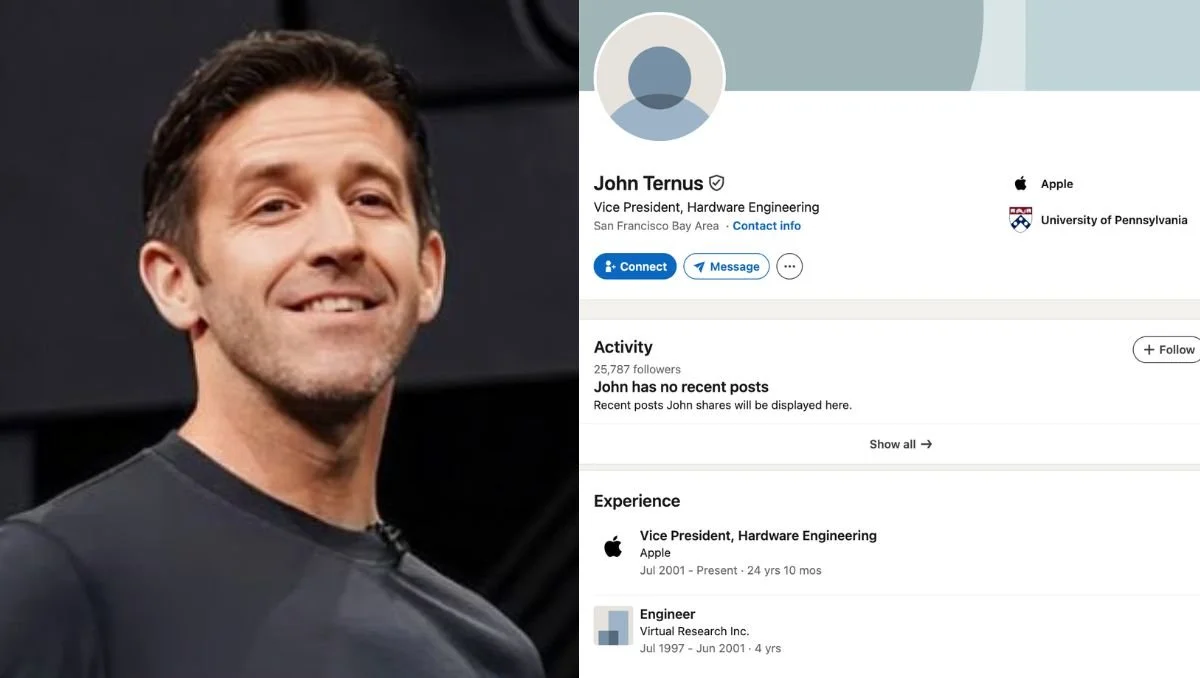
There’s something quietly revealing (and ironic) about the fact that John Ternus, arguably the most important figure for the future of Apple, has virtually no presence on LinkedIn.
The latest CEO has no history of polished leadership posts, reflections on management, or any visible effort to cultivate an audience.
But he's clearly proven that, maybe, it doesn't matter.
LinkedIn still presents itself as the internet’s professional layer, where ideas and experience are supposed to rise on merit. And to be fair, there is still substance there if you look hard enough. But over time, the platform has drifted into something more performative than practical. What gets rewarded isn’t always clarity of thought or depth of experience; it’s engagement. That usually means emotionally resonant stories, broadly relatable anecdotes, or content engineered to prompt reactions rather than reflection. The result is a feed that often feels less like a knowledge network and more like a stage.
That shift matters because it distorts how people think about networking in the first place. For a long time, the implicit advice has been to build in public: grow your audience, share your lessons, stay visible. There’s some truth to that, but it also turns networking into a kind of ongoing performance. You’re not just connecting with people; you’re signaling to them, positioning yourself, managing perception. It’s a layer of friction that makes the whole process feel more transactional than it actually needs to be.
Plus...it’s not especially effective.
Real professional relationships rarely come from comment sections or cold connection requests. They come from conversations which are ongoing, contextual, and usually happening out of view. That’s where the gap between platforms like LinkedIn and the way people actually build trust becomes obvious.
If someone like John Ternus didn’t rely on public platforms to build his career, it’s likely because he didn’t have to. Influence at that level tends to grow through proximity: working closely with the right people, building credibility over time, being part of small circles where information and opportunities move quickly and informally.
What’s interesting is that the tools people are gravitating toward now reflect that same dynamic. More and more, we're seeing that meaningful professional interaction is shifting into private, high-signal group chats. These environments don’t look like traditional networking platforms, but they function far more effectively as networks.
Part of what makes group chats work is their structure. Conversations unfold naturally, without the pressure to perform for a broader audience. People participate because they’re interested, not because they’re trying to be seen. Over time, those interactions layer into familiarity, and familiarity turns into trust. From there, it’s a very short step to more direct relationships: side conversations, introductions, collaborations that would never have emerged in a public feed.
Twitter Retires Communities & Introduces Group Chats
Even platforms built around broadcasting are starting to tilt in this direction. Twitter/X’s gradual move away from features like Communities and toward more private, group-based interaction is a direct reflection of user behavior. People are signaling that they want spaces where the conversation feels intentional rather than ambient.
Group chats have been around for years, of course, but their role is evolving. They’re no longer just casual side channels; they’re becoming the primary layer where ideas are tested, relationships are built, and opportunities are surfaced. In many ways, they solve the core problem that traditional networking platforms haven’t been able to fix: how to create environments where people can interact meaningfully without turning every interaction into content.
Seen through that lens, John Ternus’s absence from LinkedIn stops looking like an anomaly and starts to feel almost predictable. The kind of career he’s built doesn’t depend on visibility in public networks. It depends on being embedded in the right conversations, with the right people, over a long enough period of time for trust to compound.
That points to a broader shift in how networking actually works today. The emphasis is moving away from scale and toward depth, away from broadcasting and toward participation. LinkedIn still has value as a directory and a discovery tool, but it’s no longer where the most important interactions happen. Those are taking place in smaller, less visible spaces, where the incentive isn’t to perform but to contribute.
The most valuable networks increasingly don’t look like networks at all. They look like conversations built around shared context.
If you're interested in joining or creating your own community chat, check out tribechat.com, a next generation group chat platform that is optimized for human connection around shared interests.
We are pretty confident that you're going to love it.
