
Padel Gear Guide for Bay Area Players: What's Actually Worth Buying
Padel Gear Guide for Bay Area Players: What's Actually Worth Buying
Walk into any padel pro shop and within about three minutes someone will have you convinced that you need a $300 carbon fiber paddle, court-specific shoes, a premium bag, overgrips in three different thicknesses, and possibly a sports nutritionist. Walk out with all of that on your first visit and you've spent more than a month of court fees before you've figured out whether you even like the sport.
Here's the gear conversation that a friend who's been playing for a year in the Bay Area would actually have with you. What matters, what doesn't, what to spend money on now, and what to ignore until you're ready for it.
The Paddle: Don't Overthink It (At First)
The padel paddle is the piece of gear everyone obsesses over first and it's genuinely the one where the advice is most counterintuitive. At beginner level, the paddle you learn on matters less than almost every sales pitch will tell you.
Here's the thing: when you're still learning to read the walls, control your swing, and figure out court positioning, the performance differences between a $60 beginner paddle and a $200 mid-range one are not the thing limiting your game. Your technique is the thing limiting your game. An expensive paddle in the hands of someone who hasn't learned the back wall lob yet is just expensive.
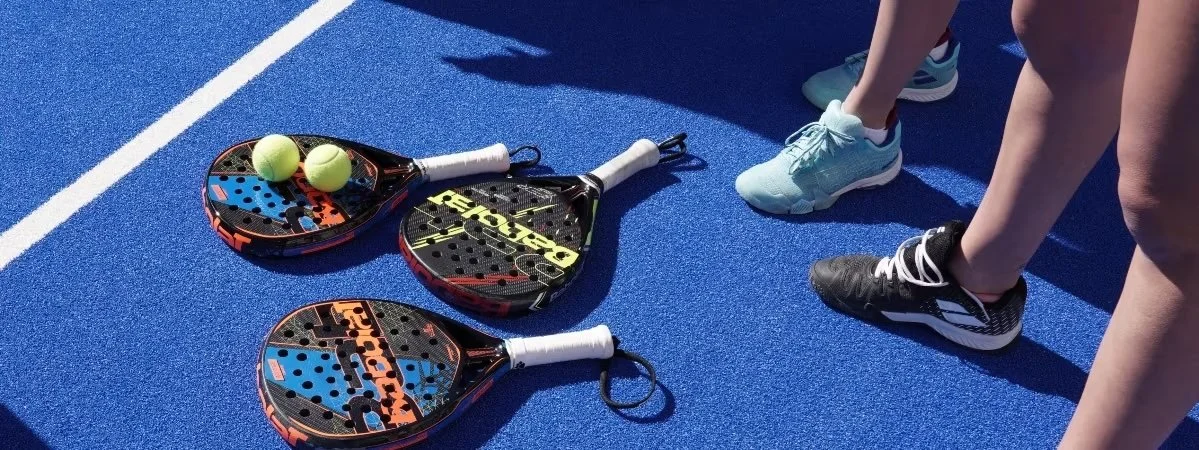
That said, buying the absolute cheapest option isn't the move either. Paddles in the $60 to $120 range from reputable brands (Head, Babolat, Bullpadel, Wilson) give you a solid fiberglass face, a comfortable grip, and enough control to actually learn with. They won't hold you back. They'll do the job. And when you've played enough to know what you actually want from a paddle (more power? more control? specific balance point?) you'll be able to make that upgrade decision with real information instead of just marketing language.
The carbon fiber question: Carbon fiber paddles are stiffer, generate more power, and are genuinely better for experienced players who have the consistency to benefit from that extra pop. For beginners they're actually harder to control. The "softer" feel of a fiberglass face is more forgiving when your technique is still developing. Don't chase carbon until you're consistently making the shots you're going for.
Where to buy in the Bay Area: The pro shops at Bay Padel (Treasure Island and Dogpatch) have decent starter inventory and the staff will give you honest recommendations. If you want more selection, East Coast Padel Shop and Padel USA ship fast and have the widest range of brands. For used paddles (genuinely underrated option for your first one) check the buy/sell thread in the Bay Area Padel Community, people cycle through gear quickly here.
Shoes: This Is Where You Should Actually Spend Money
Here's the gear item that beginners consistently underinvest in and experienced players consistently say was the biggest difference-maker when they finally upgraded. Court shoes.
Running shoes, cross-trainers, tennis shoes... all of them will work in a technical sense. You can play padel in them. But padel involves a lot of lateral movement, quick stops, and pivoting on a surface (usually artificial turf on an indoor court) that rewards specific grip patterns. Running shoes are designed for forward motion and have a grip profile that doesn't account for sideways cuts. The result is a subtle feeling of your feet sliding just slightly on quick direction changes, which affects your confidence on court even if you don't immediately identify shoes as the cause.
Padel-specific shoes (or clay court tennis shoes, which have a similar grip pattern and work perfectly for indoor padel) solve this. The herringbone or multi-directional grip on the sole gives you the lateral stability that the sport actually demands, and once you feel it you'll understand immediately why experienced players are particular about this.
Good options in the $80 to $130 range: Adidas Barricade, Asics Gel-Game, NOX AT10 (padel-specific). Don't need to go higher than that. The $200 premium court shoes exist but the jump in performance from the mid-range is marginal.
Where to buy: The pro shops at Bay Padel carry some shoe options but selection is limited. For better variety, Tennis Warehouse ships quickly and carries most of the relevant brands. If you're near the Sunnyvale location, some South Bay tennis retailers carry padel-compatible shoes in person.
Grip: The Cheap Upgrade That Actually Matters
This one gets overlooked almost universally by beginners and it's genuinely a small thing that makes a noticeable difference. The grip on a stock paddle (what comes on the paddle when you buy it) is usually fine but not great. Sweaty hands during an intense game, which happens faster than you'd expect in a 90-minute session, make a mediocre grip a real liability.
Overgrips (the thin wrap you put over the existing grip) cost about $3 to $5 each and take two minutes to apply. They absorb sweat, improve your feel on the paddle, and give you confidence that the paddle isn't going anywhere mid-swing. Buy a pack of five or ten. Replace when they start to feel slick. This is the cheapest performance upgrade available to you and most beginners don't know it exists.
What to buy: Tourna Grip is the classic choice and works great. Wilson Pro Overgrip is another reliable option. Any reputable tennis overgrip brand transfers perfectly to padel.
Bag: Use What You Have
Padel bags are designed to carry paddles in a way that protects them and also signals to everyone at the court that you take the sport seriously. They are not necessary. A racquet bag from tennis that you already own works fine. A backpack that fits your paddle works fine. Even just carrying the paddle by hand if you're driving directly to the court works fine.
The dedicated padel bag becomes worth thinking about when you're playing multiple times a week and carrying multiple paddles (which happens more quickly than you'd expect once you get into it). Until then it's purely aesthetic.
Balls: Don't Buy These Yourself Yet
Courts provide balls. If you're getting into regular private court bookings with a consistent group you'll eventually want to keep your own supply fresh (padel balls lose pressure faster than tennis balls and the difference between a fresh ball and a dead one is noticeable). But for your first several months of playing, this is not your problem to solve. The venues handle it.
When you do start buying your own: Head Pro, Bullpadel Performance, and Wilson Padel are the brands most commonly used at Bay Area facilities and all perform well. Buy in tubes of three and rotate them regularly.
The Honest Starter Gear List With Actual Prices
If you're starting from zero, here's what to actually buy before your first session and what to hold off on:
Buy now: Court shoes ($80 to $130), a beginner/mid-range fiberglass paddle ($60 to $120 from a reputable brand), overgrips ($10 for a pack of five).
Wait on: Paddle upgrade (after 3 to 6 months when you know what you want), padel-specific bag (when you're playing 3+ times a week), second paddle (when you're genuinely competitive and borrowing from someone isn't an option).
Don't bother with: Padel-specific clothing (any athletic wear is fine), specialized string machines (padel paddles don't have strings), any piece of gear costing over $200 until you've been playing for at least six months.
Total honest startup cost for a Bay Area beginner: $150 to $250 if you buy the paddle and shoes new, $80 to $150 if you find a used paddle through the community. Either way, a fraction of what the pro shop will try to convince you to spend on day one.
The gear genuinely matters less than the court time. Get the shoes right, get a reasonable paddle, and spend the rest of your budget on court bookings. That's the advice your most experienced padel friend would give you and it's the advice we'd give you here.
Got gear questions specific to the Bay Area scene? Drop them in the Bay Area Padel Community thread and someone who's already been through the upgrade cycle will point you in the right direction.
