
How to Find a Padel Partner in the Bay Area: The Honest Guide
How to Find a Padel Partner in the Bay Area: The Honest Guide
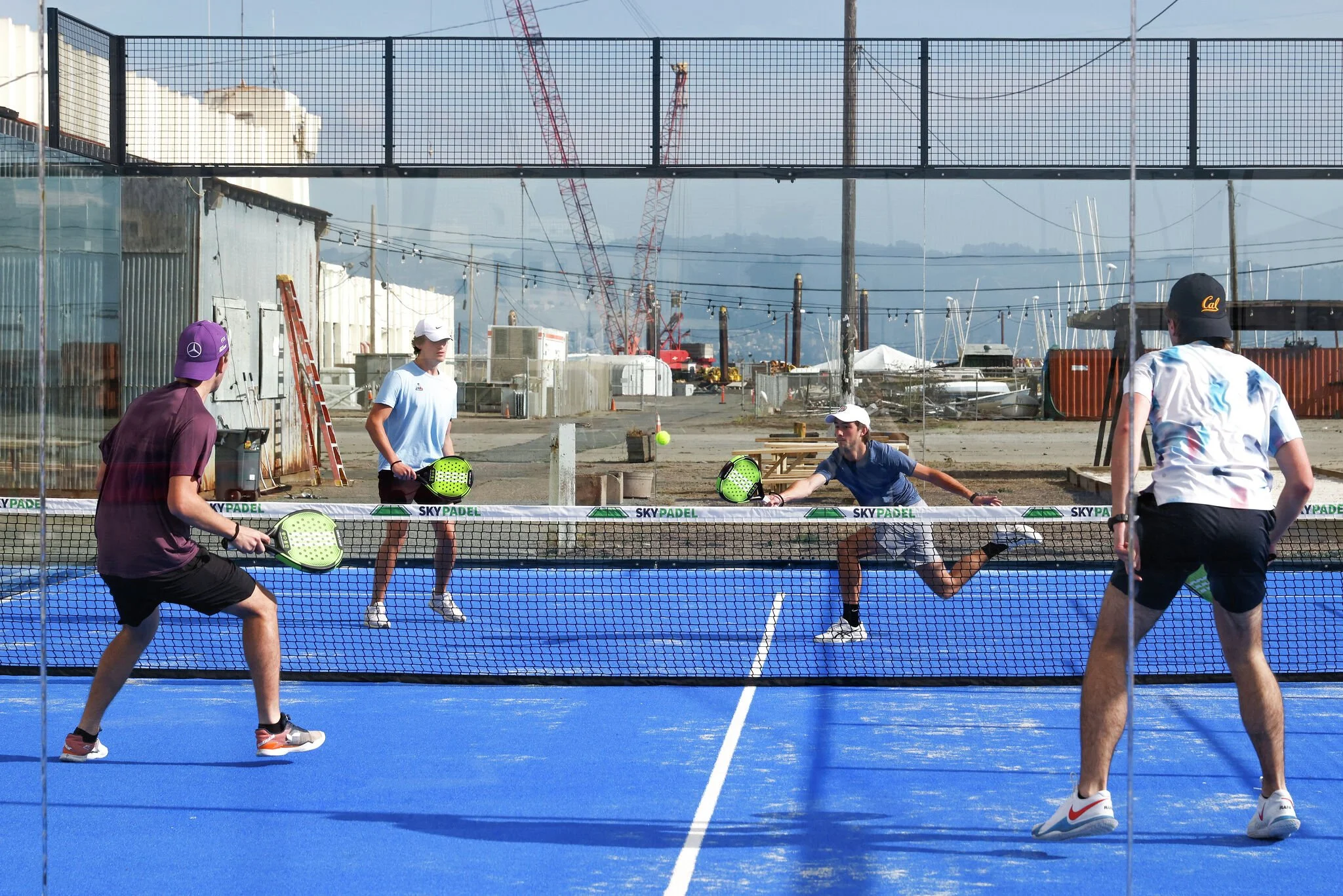
Padel has a structural problem that nobody fully warns you about when you fall in love with the sport. You cannot play it alone. You cannot play it with one other person. You need four players, which means every single time you want to get on a court, you need to find and coordinate three other humans who are available at the same time, at the same place, at roughly the same skill level. As logistical challenges go, this one is genuinely annoying in a way that tennis and pickleball just aren't.
In a city where everyone is busy and scheduling anything requires a minor miracle, this is actually the thing that stops some people from playing as often as they want to. They love the sport. They just can't always make the numbers work.
Here's every method that Bay Area padel players are actually using to solve this problem, ranked roughly by how well they tend to work.
The Bay Area Padel Community (Start Here)
The most direct solution is a community specifically built around connecting Bay Area padel players, which is exactly what this tribe is. The "Find My Partner" thread exists specifically for this, and it works faster than most people expect. Post your level (honest about it, sandbagging ruins games for everyone), your preferred courts, and your typical availability, and you'll usually get responses within a few hours from people who are already looking for the same thing.
What makes the community approach work better than apps is the context. You can tell from someone's posting history whether they're a casual player who doesn't mind if the game runs loose or someone who shows up prepared and wants to play seriously. You can ask follow-up questions. You can find someone who specifically loves the same court you do or hates the same scheduling constraints you have. It's a real conversation rather than a profile swipe.
The other thing the community does that no app replicates: it helps you assemble a rotation of four or five regular players rather than always scrambling for the same game. Once you've played with three or four people through the community and found people whose schedules and levels work, those become your people. You stop looking every week and start just confirming the same group.
Playtomic's Match Feature
Playtomic is the app most Bay Area courts use for court booking and it also has a match-finding function that's genuinely useful, especially for finding games quickly when your usual group isn't available. You post that you're looking for a game at a specific court on a specific day, set your approximate level, and other Playtomic users at that facility can join.
The honest assessment: it works pretty well for filling a last-minute spot and for meeting people at your home court. It works less well for building a consistent group because the connections are transactional rather than relational. You might play a great game with someone through Playtomic and then never see them again simply because neither of you thought to exchange information.
Use Playtomic to get on court when your usual group can't make it. Use the community for building the actual relationships.
How to set it up: Download the app, create a profile, set your level honestly (Playtomic uses a 1 to 5 scale), and navigate to the "open matches" section for whichever Bay Area court you want to play at. The Embarcadero, Treasure Island, Dogpatch, Oyster Point, and Sunnyvale locations are all on there.
Open Play Sessions
Every Bay Area padel facility runs some version of open play, where you show up, pay a per-session fee, and get sorted into games with whoever else is there. It's the padel equivalent of pickup basketball and for meeting people organically it's genuinely one of the best formats available.
The Embarcadero's free community hours are the most accessible entry point and the crowd is mixed enough that you'll encounter players at every level. Treasure Island runs structured open play sessions that tend to be better organized in terms of skill-level groupings. Dogpatch's smaller size means the open play crowd is tighter and you'll start recognizing faces faster.
The thing about open play is that it's simultaneously the best way to meet people and the worst way to guarantee a quality game. Some sessions are great, balanced, and run smoothly. Others are chaotic, skill-mismatched, and frustrating. Going in without expectations and treating it as a social opportunity rather than a competitive one makes the experience consistently better.
Tip: the people who show up to open play regularly are exactly the people you want to know. Make the effort to chat between games, ask people when they usually play, and suggest exchanging contacts if a game went well. Most of your best padel relationships will start in exactly this low-pressure context.
The Tech Community Network (Especially in Silicon Valley)
This one is specific to the Bay Area in a way it isn't anywhere else in the US. Padel has become genuinely embedded in the tech community's social fabric, particularly in Silicon Valley, and if you work in tech (or adjacent to it) your company's Slack is probably a faster way to find padel partners than any app.
Seriously. Check your company Slack for a #padel channel. If it doesn't exist, create one. The Bay Area tech crowd adopted the sport fast and the internal company networks are often the place where regular weekly games get organized. Several members of the padel community here have noted that they found their most consistent playing group through work rather than through any sport-specific channel.
Beyond your own company, communities like BSTN (Bay Area sports and social networks) and the broader tech social scene on LinkedIn and Instagram have padel coordination happening in the comments and DMs on a regular basis. It's informal but it works.
Instagram and the Local Scene
Bay Padel and Park Padel are both active on Instagram and their accounts are worth following not just for facility updates but because the comments sections and story replies have become informal places where players find each other. Comment on a post about upcoming open play and you'll often find other people commenting who are looking for the same session. It's not a system exactly...it's more like organized chaos that somehow keeps producing connections.
A few Bay Area padel players have also started their own accounts documenting the local scene, which creates another layer of community around the sport. Following the local padel Instagram ecosystem won't find you a partner directly but it puts you in the network where those connections happen.
When You're Moving to the Bay Area and Starting From Zero
This comes up in the community threads regularly, people relocating to SF or Silicon Valley who played regularly back home and are starting the social network from scratch. The honest advice: go to open play at your nearest venue twice in the first week. Introduce yourself as someone new to the area who is looking for regular partners. Padel players are (in our experience) unusually welcoming to this kind of directness because everyone has been on the other side of it. The sport is new enough here that most regular players remember exactly what it was like to not have a group yet.
Then post in the Bay Area Padel Community with your level, your location, and that you're new to the area. The response rate for these posts is high because helping someone find their padel people is genuinely one of the things this community is here to do.
The Honest Reality About Skill Levels
The biggest source of friction in finding padel partners isn't actually availability or geography. It's skill level mismatch, and the main reason for that is that people aren't honest about where they are in their game (usually they overestimate themselves slightly, which is very human but creates genuinely bad games for everyone involved).
The Bay Area padel community uses a rough 1 to 4 scale: 1 is brand new (fewer than 10 sessions), 2 is developing (knows the rules, working on consistency), 3 is competent (plays regularly, can hold rallies, understands tactics), 4 is experienced (has played for years, competitive mindset). When you post looking for partners, be honest about your number. A 2 paired with two 3s and a 4 is a frustrating experience for everyone and it's the main reason good-faith partner searches sometimes go sideways.
When in doubt, rate yourself slightly lower than you think you are. A game where you're the weakest player and pulling your weight is a better experience than a game where you've overrepresented your level and are holding the other three back.
Finding your padel people in the Bay Area takes a little effort upfront and basically none after that. Most people who've been playing here for six months have a group they love and more invitations to games than they have time for. The work is just in the first few weeks. Use the community, go to open play, be honest about your level, and be the person who suggests exchanging contacts after a good game.
The rest takes care of itself.
