
Pebble Founder Eric Migicovsky on Kickstarter, Smartwatches, and Building Without VC
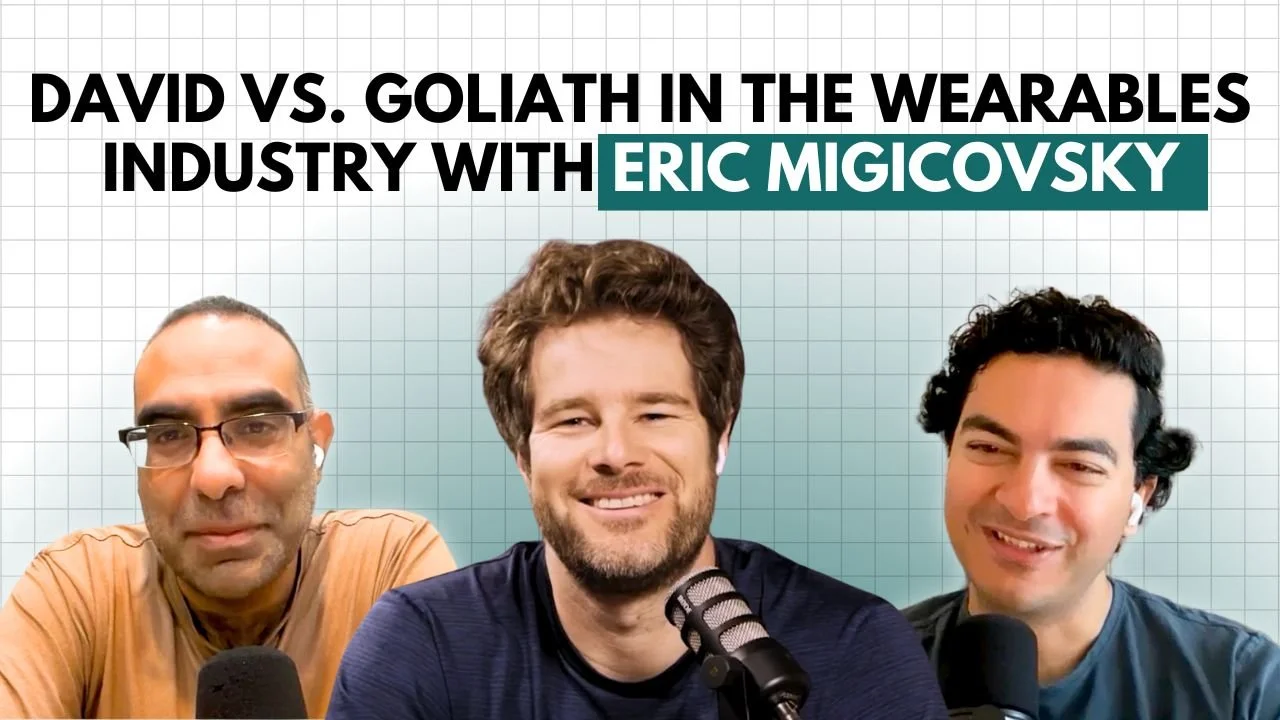
Pebble founder Eric Migicovsky returns to Founders in Arms to share the story behind one of the most iconic hardware startups—and why he’s rebuilding it with a completely different approach.
In this episode, Eric breaks down the original Pebble journey—from raising $10M on Kickstarter to scaling into retail—and the hard lessons learned from inventory risk, venture pressure, and product decisions.
Now, nearly a decade later, he’s back with a new company, Core Devices, taking a radically different path: small team, no VC, limited production, and building products purely for himself.
This conversation dives deep into:
The original Pebble Kickstarter story
Why authentic marketing beats polished launches
Hardware vs. software complexity
The dangers of inventory in consumer hardware
Venture vs. bootstrapped startup paths
Inventor vs. founder mindset
Apple’s ecosystem and platform lock-in
A new “artisanal hardware” model
AI and the future of wearables
In this episode, we cover:
(00:00) The Kickstarter moment that changed everything
Pebble raised $600K on day one—far exceeding their $100K goal.
What followed was a rapid realization: this wasn’t just a project, it was a company.
(01:20) Why Pebble is back (sort of)
Eric didn’t get the Pebble brand back—but he did recover the IP.
Now, he’s relaunching under a new company: Core Devices.
(04:40) Why no smartwatch replaced Pebble
After trying Apple Watch, Pixel Watch, and others, Eric found none met his core needs:
Always-on display
Long battery life
Simple notifications
Physical controls
Modern smartwatches added features—but lost usability.
(06:30) The philosophy behind Pebble
Pebble wasn’t trying to replace your phone.
It was designed to do a few things extremely well:
Tell time
Show notifications
Control music
That simplicity became its advantage.
(08:30) Why Eric isn’t building for the market
This time, Eric is building for himself—not chasing a market.
That means:
No attempt to maximize TAM
No feature creep
No compromise for growth
Just a product he personally wants to use.
(09:00) Why venture-backed paths can be limiting
Eric describes VC as a “train track”—once you’re on it, direction is constrained.
With Core Devices, he’s intentionally avoiding that path.
(09:30) The original Kickstarter strategy
There was no marketing hack.
What worked:
Clear product messaging
Authentic video (shot with friends)
Simple explanation of value
It resonated because it was real—not overproduced.
(12:00) Turning a product into a story
Instead of focusing on manufacturing immediately, Eric focused on PR.
This created a flywheel:
Press → more backers
More backers → more press
That momentum made Pebble a phenomenon.
(14:30) The “5-year overnight success”
Pebble wasn’t sudden.
Eric had been working on smartwatches since 2008—years before the breakout moment.
(15:30) Inventor vs. founder mindset
Eric identifies more as an inventor than a founder.
Difference:
Founders optimize for company success
Inventors optimize for the product itself
This distinction shapes everything from product decisions to growth strategy.
(19:00) Why hardware is really a software problem
Building the hardware is relatively straightforward today.
The real challenge is software:
Operating systems
UX
Reliability
Rebuilding Pebble OS from scratch would have taken years.
(22:00) How Eric got Google to open source Pebble
After a chance conversation, Eric simply asked Google—and they said yes.
It took a year to process internally, but ultimately unlocked the ability to rebuild.
(23:00) Fighting Apple’s ecosystem
Apple limits third-party smartwatch functionality (e.g., replying to notifications).
This creates a major barrier for competitors—and is now under regulatory scrutiny.
(27:00) The new Core Devices model
Eric’s new company is radically different:
3-person team
No VC funding
Pre-orders instead of inventory
Small production runs
The goal: sustainability over scale.
(28:00) The “5,000 unit” principle
Eric believes he can sell 5,000 units of anything he personally loves.
So he designs products to be profitable at that scale—not millions.
(30:00) Using old Pebble inventory to move faster
By acquiring leftover Pebble parts, the team skipped major manufacturing steps.
This allowed them to ship in just 5 months—a huge speed advantage in hardware.
(33:00) Why he’s avoiding retail entirely
Retail creates massive risks:
Inventory buildup
Distribution complexity
Sales pressure
Instead, Core Devices sells directly and keeps production limited.
(35:00) The $20M inventory mistake
In 2015, Pebble overestimated demand and built too much inventory.
Result:
Missed projections
$20M financial hit
Major operational stress
A defining lesson in hardware risk.
(39:00) Why hardware is a hits-driven business
Consumer hardware isn’t predictable.
Success depends on:
Launch moments
Seasonal demand (e.g., holidays)
Cultural relevance
Miss slightly—and the consequences are massive.
(40:30) A new approach: sustainability over growth
Eric’s new goal isn’t to build a massive company.
It’s to build a sustainable one:
Small team
Controlled production
Profitable at low scale
(41:00) AI and the future of wearables
Eric sees AI as useful—but not the core value.
Features like ChatGPT on your wrist are interesting, but the primary job of the device remains simple utility.
Key Takeaways for Founders
Authenticity beats polish
Simple, honest messaging can outperform expensive marketing.
Hardware success depends on timing and narrative
Momentum and storytelling matter as much as the product.
Inventory is the biggest risk in hardware
Overproduction can kill even successful companies.
You don’t need venture capital to build great products
Alternative models can be more sustainable—and enjoyable.
Build for yourself (if you truly understand the user)
Strong product intuition can replace traditional market research.
Scale is optional—but sustainability isn’t
A smaller, profitable business can outperform a large, fragile one.
About the Guest
Eric Migicovsky is the founder of Pebble, one of the first smartwatches, which raised over $10M on Kickstarter and helped define the category.
He later sold Pebble to Fitbit and worked as a partner at Y Combinator. He is now building Core Devices, a new hardware company focused on simple, functional consumer products.
Listen to Founders in Arms
Founders in Arms explores the ideas shaping technology, startups, and the future of innovation.
🎙 Subscribe to Founders in Arms on your favorite platform.
💬 Join the conversation at TribeChat.com.
🚀 Discover more insights from founders and operators shaping the future of technology.
